
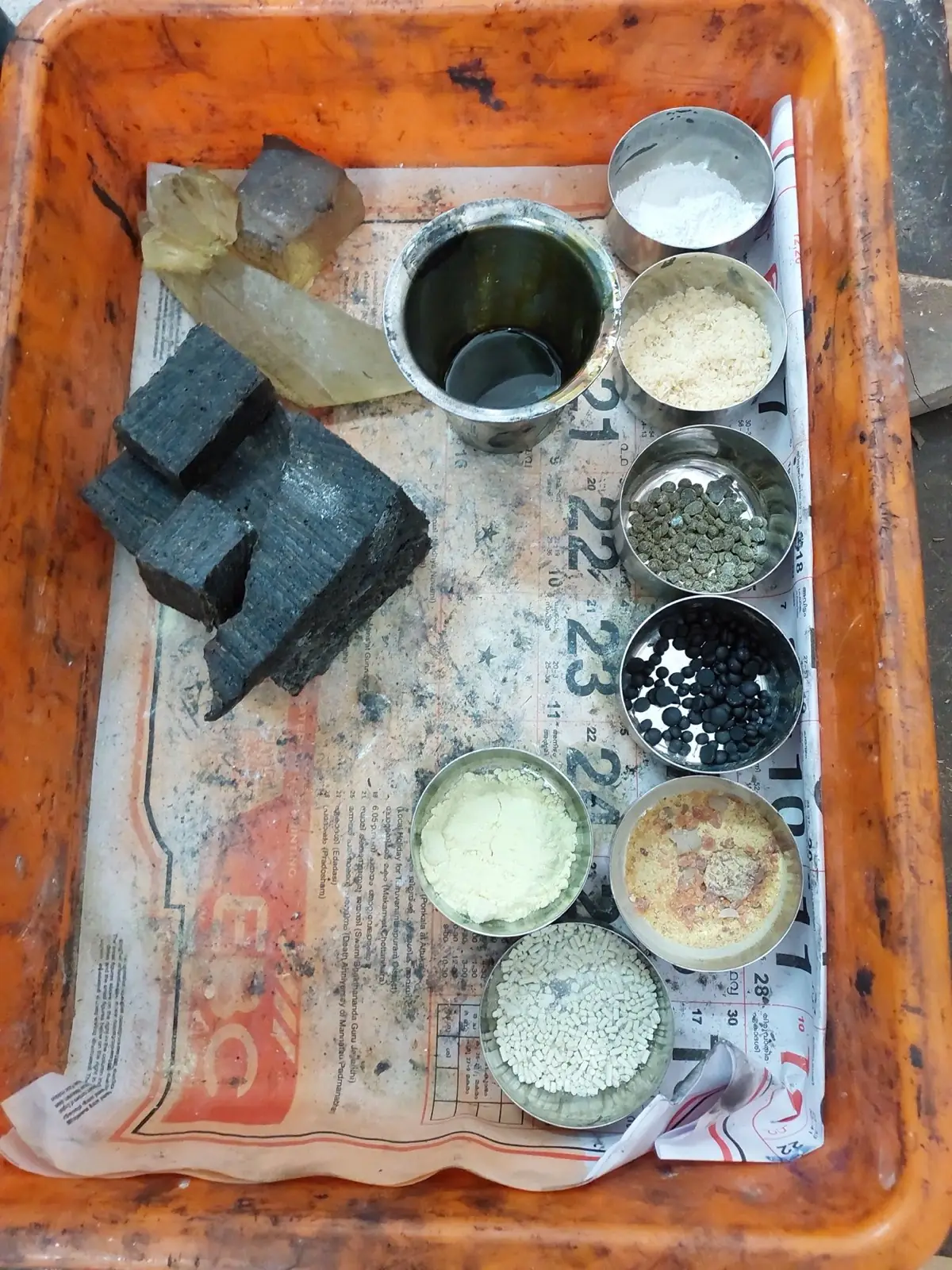
Rubber Process Oil
Rubber Process Oil (RPO)
Photo: Vis M, CC BY-SA 4.0
Rubber process oil (RPO) is a petroleum oil mixed into natural and synthetic rubber to make compounds easier to process and to extend the polymer. It is used in tyres, tubes, retreads, reclaim rubber and moulded or extruded rubber products. Petroseal Enterprises supplies RPO across Pakistan and exports low-PAH grades from Karachi to European rubber and tyre manufacturers.
Key features
- — Improves mixing, dispersion and extrusion of rubber compounds
- — Low-PAH grades for EU REACH Annex XVII compliance
- — Aromatic (RAE) and naphthenic grade types
- — Certificate of Analysis with PAH / PCA content for every batch
- — Steel drums or bulk — local delivery and export
Applications
- — Passenger and truck tyres
- — Automotive tubes and retreads
- — Reclaim rubber
- — Extrusion profiles
- — Moulded and extruded rubber products
Technical specs
Grade type
Packaging
Supply
Pakistan climate recommendation
Store sealed drums under cover, away from heat, direct sunlight and ignition sources. Tell us the rubber type, application and PAH limit you work to, and we will confirm the grade and send its Certificate of Analysis.
| Grade type | Low-PAH aromatic (RAE) |
| Packaging | Steel drums |
| Supply | All over Pakistan |
What is rubber process oil?
Rubber process oil is a refined petroleum oil added to rubber during mixing. It softens the compound so fillers such as carbon black disperse evenly, reduces mixing time and energy, improves extrusion and moulding, and extends the rubber polymer.
Process oils are classed by the share of aromatic (Ca), naphthenic (Cn) and paraffinic (Cp) carbon in the oil (ASTM D2140). Aromatic oils have the highest solvency and suit SBR and natural rubber tyre compounds. Naphthenic and paraffinic oils are lighter in colour and suit EPDM, butyl and coloured or non-staining products. A low aniline point indicates a more aromatic oil; a high aniline point indicates a more paraffinic one.
Low-PAH grades for Europe
Traditional distillate aromatic extract (DAE) contains polycyclic aromatic hydrocarbons (PAHs). EU REACH Annex XVII, entry 50, prohibits extender oils in tyres above 1 mg/kg benzo(a)pyrene or 10 mg/kg for the sum of eight listed PAHs. Low-PAH grades — residual aromatic extract (RAE), treated distillate aromatic extract (TDAE) and naphthenic oils — are used instead.
The IP 346 test (DMSO extract below 3 %) is the common screening method; EN 16143 measures the PAHs directly. Every RPO consignment Petroseal ships to Europe carries a Certificate of Analysis stating its PAH or PCA content.
Low-PAH aromatic grade (RAE type) — typical values
Typical values. Each consignment ships with a batch Certificate of Analysis.
| Property | Test method | Unit | Value |
|---|---|---|---|
| Specific gravity at 15.6 °C | ASTM D1298 | — | 0.985 |
| Kinematic viscosity at 100 °C | ASTM D445 | cSt | 60 |
| Aniline point | ASTM D611 | °C | 68 |
| Flash point (Cleveland open cup) | ASTM D92 | °C | 270 |
| Pour point | ASTM D97 | °C | 27 |
| Refractive index at 60 °C | ASTM D2159 | — | 1.550 |
| Viscosity-gravity constant (VGC) | ASTM D2501 | — | 0.90 |
| Sulphur | ASTM D2622 | wt % | 4 |
| PAH, sum of 8 EU-listed / benzo(a)pyrene | EN 16143 | mg/kg | < 10 / < 1 |
Naphthenic grade, low PCA — specification
Specification limits. Each consignment ships with a batch Certificate of Analysis.
| Property | Test method | Unit | Value |
|---|---|---|---|
| Appearance | Visual | — | Clear liquid |
| Colour | ASTM D1500 | — | ≤ 4.0 |
| Density at 29.5 °C | ASTM D1298 | g/ml | 0.900 – 0.950 |
| Kinematic viscosity at 40 °C | ASTM D445 | cSt | 360 – 400 |
| Flash point (Cleveland open cup) | ASTM D92 | °C | ≥ 240 |
| Pour point | ASTM D97 | °C | ≤ −9 |
| Aniline point | ASTM D611 | °C | 95 – 105 |
| PCA content (DMSO extract) | IP 346 | wt % | ≤ 3.0 |
| PAH, sum of 24 | EN 16143 | mg/kg | ≤ 10 |
| Carbon type Ca / Cp / Cn (typical) | IR method | % | 15 / 52 / 33 |
Local supply & export
Supplied all over Pakistan and exported from Karachi.
- Packaging
- Steel drums · Bulk
- Local supply
- All over Pakistan
- Export port
- Karachi, Pakistan
- Incoterms
- All Incoterms® 2020 rules on request, including FOB, CFR and CIF
- Current export markets
- Europe
Shipment documents
- — Certificate of Analysis (COA) for every batch
- — Safety Data Sheet (SDS)
- — Certificate of Origin
- — Packing list and bill of lading
- — Third-party inspection on request
How an order works: send the grade, quantity, packaging, Incoterm and destination port → we quote → proforma invoice → batch testing and COA → loading at Karachi → shipping documents.
Technical guides
Application notes and specification articles for this product.
- Rubber Process Oil: Types, Specifications and EU PAH Limits
What rubber process oil does, how aromatic, naphthenic and paraffinic oils differ, which test values matter, and why European tyre makers need low-PAH grades.
Frequently asked questions
+What is rubber process oil?
Rubber process oil (RPO) is a refined petroleum oil added to natural or synthetic rubber during mixing. It helps fillers disperse, shortens mixing time, improves extrusion and moulding, and extends the polymer. It is used in tyres, tubes, retreads, reclaim rubber and moulded or extruded rubber products.
+What are the types of rubber process oil?
RPO is classed by its aromatic, naphthenic and paraffinic carbon content (ASTM D2140). Aromatic oils, including low-PAH RAE and TDAE, suit SBR and natural rubber tyre compounds. Naphthenic and paraffinic oils suit EPDM, butyl and non-staining products.
+Is your rubber process oil REACH compliant?
Low-PAH grades supplied for Europe meet the REACH Annex XVII entry 50 limits for extender oils: below 1 mg/kg benzo(a)pyrene and 10 mg/kg for the sum of eight listed PAHs. Each batch Certificate of Analysis reports the PAH or PCA content.
+What does the aniline point of a process oil tell you?
The aniline point (ASTM D611) indicates how aromatic an oil is. A low aniline point means a more aromatic oil with higher solvency for rubber; a high aniline point means a more paraffinic oil.
+What is the difference between DAE, TDAE and RAE?
DAE (distillate aromatic extract) is a traditional high-aromatic oil with high PAH content and is restricted in EU tyres. TDAE is DAE further treated to remove PAHs, and RAE (residual aromatic extract) is a low-PAH aromatic oil from the refining residue. Both TDAE and RAE are used as DAE replacements.
+Do you export rubber process oil to Europe?
Yes. Petroseal Enterprises exports rubber process oil from Karachi to European buyers in steel drums or bulk, and supplies it all over Pakistan. Shipments include a batch COA, SDS, certificate of origin and packing list.