
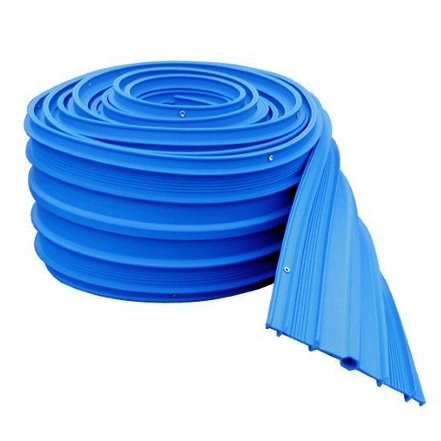
Waterstops versus membrane waterproofing
Sheet membrane—PetroGrip SBS on basement walls—blocks water across continuous surfaces. PVC waterstops seal the joint itself where concrete is cast in lifts: wall-to-floor construction joints, expansion joints with movement, and pipe penetrations through cast walls. Petroseal PVC waterstoppers install during reinforcement fixing, before concrete pour, so the profile is embedded across the joint line.
A basement package without waterstops at construction joints will leak at those lines even if field membrane is perfect.
Profile selection
| Profile | Typical use |
|---|---|
| Center bulb | General construction joints, moderate head |
| Dumbbell | Standard water-retaining walls |
| Kicker type | Wall-to-slab junctions with key |
Widths of 150mm, 200mm, and 250mm match wall thickness and joint movement. Select profile based on head pressure at the joint—tank bases and deep basements need profiles rated for the hydrostatic load, not the cheapest catalog line.
Installation during concreting
- Secure waterstop to rebar so it does not float or fold during pour
- Keep splices welded or bonded per manufacturer method
- Avoid puncturing the bulb with vibrators or coarse aggregate
- Coordinate with PetroGrip membrane upturn at kicker details
Applications with Petroseal systems
Basements, water tanks, tunnels, and process pits across Pakistan pair PVC waterstops with PetroGrip SBS membrane and PetroSelfGrip details. Read our basement waterproofing guide for full below-grade build-up.
Submittals and profile selection: 0321 8489737 · petrosealenterprises.com