
PETROSEAL
← All articles

self adhesive membrane · bathroom waterproofing · terrace waterproofing · PetroGrip · Pakistan

Self-Adhesive Bitumen Membrane for Bathrooms and Terraces in Pakistan

PetroGrip self-adhesive membrane delivers flame-free waterproofing for bathrooms, terraces, and detail zones—when to use 1.5mm vs 2mm and how to bond correctly on Pakistani substrates.

May 2026 · 8 min read

When cold-applied membrane beats a torch on site

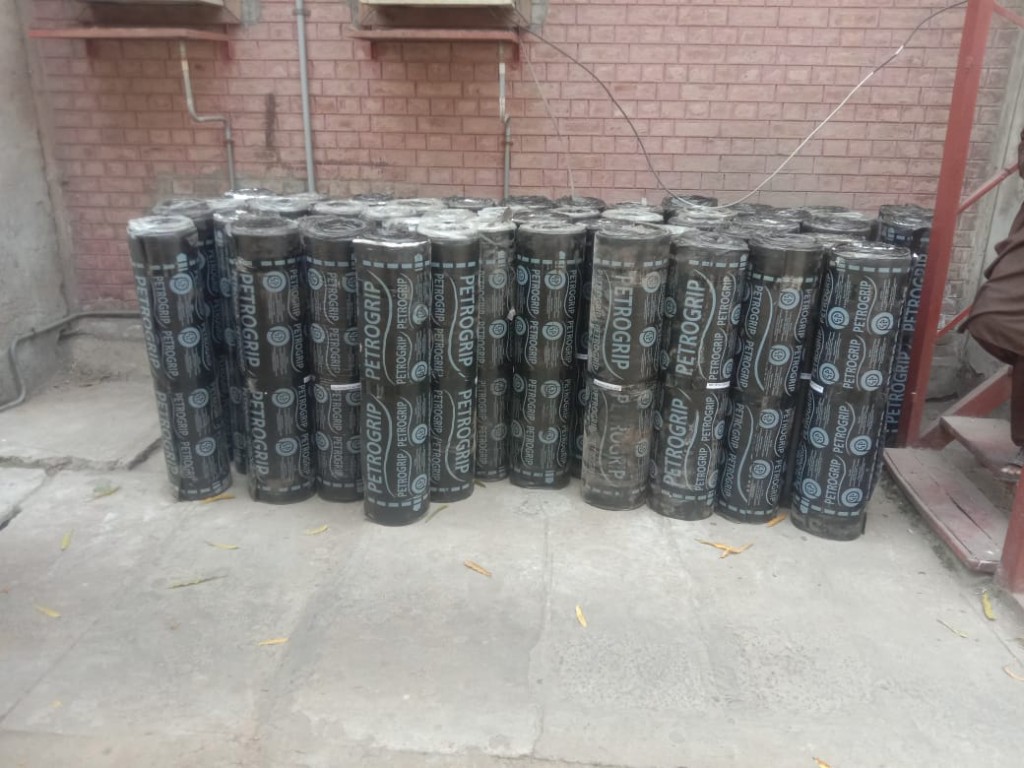
Self-adhesive bitumen membrane eliminates open flame on congested slabs—bathrooms, kitchens, stair landings, elevator machine rooms, and hospital wards where propane torch work is restricted or unsafe. PetroGrip self adhesive sheets from Petroseal Enterprises carry a rubberized bitumen compound on the underside and a removable release film on top. The applicator peels, positions, and presses; laps are rolled firm and sealed per detail, without welding with a torch.

Across Pakistan, developers on high-rise towers in Lahore, Karachi, and Islamabad increasingly specify self-adhesive membrane for wet-area pods while keeping torch-applied APP or SBS on the main roof field. That split is rational: small enclosed footprints favor cold application; large exposed decks favor torch speed and seam strength. Petroseal manufactures both families in Lahore so one brand covers the whole building envelope.

PetroGrip thickness: 1.5mm vs 2mm

PetroGrip self adhesive bitumen membrane is supplied in 1.5mm for internal wet areas and light-duty detailing, and 2mm for terraces, bathrooms with outdoor exposure, and repair zones where a thicker compound layer is warranted. The 1.5mm sheet is appropriate under tile beds in guest bathrooms, en-suite pods, and utility rooms where the finish floor and wall tiles provide protection and traffic is pedestrian only.

The 2mm sheet is specified where the membrane may see intermittent weather before finishes, light terrace furniture, or foot traffic during construction. On residential terraces in DHA Lahore, Bahria Town, or Karachi schemes, 2mm full-field sheets with upturns at parapets and door thresholds form a continuous pan when corners and pipe penetrations are patched with cut pieces from the same roll.

Substrate preparation on Pakistani concrete and screed

Bond strength depends on a clean, dry, sound substrate. New concrete should be cured and free of laitance; old slabs need grinding or scarifying where paint, oil, or loose mortar exists. Priming may be required on very porous screed—follow the PetroGrip datasheet and Petroseal technical note for your batch. Do not stick membrane over standing water or green concrete that is still off-gassing moisture; blistering and peel-back follow within weeks.

Corners at wall-floor junctions should be coved or filleted before membrane so the sheet does not bridge a sharp ninety-degree angle under tension. Pipe penetrations get a collar of membrane bonded to the pipe with a compatible sealant approved for bitumen systems, then overlapped by the field sheet. Drains in bathrooms need clamping rings or pre-formed outlets so the waterproofing line sits above the water test level, not below it.

Bathrooms: wet rooms, showers, and adjoining bedrooms

A bathroom failure in a sold apartment is expensive—ceiling stains, tile removal, and reputation damage. Full-floor membrane under the tile bed, with sheets turned up at least 150mm on walls (higher at shower zones per consultant detail), contains migration water even when grout joints age. PetroGrip self adhesive membrane was used on institutional projects such as LUMS campus work alongside torch membrane on main roofs, showing how Petroseal systems mix by zone.

Partition walls between bathroom and bedroom should carry the membrane upturn on the wet side; do not stop at the stud line if the floor pan is continuous. Water tests before tiles—flood the slab for 24–48 hours and inspect the ceiling below—remain the best quality gate. Self-adhesive installation speeds the wet-room cycle because there is no torch cooldown or fire watch.

Terraces: slopes, upturns, and protection before tiles

Terraces need positive fall to drains before membrane. A dead-flat screed will pond; no membrane brand survives indefinite standing water. After membrane, use a compatible protection board or screed bed before porcelain or stone so chair legs and construction carts do not puncture the sheet. On exposed terraces in hot cities, pair membrane with light-colored finishes and shade where possible to reduce thermal cycling at upturns.

Parapet copings, door sills, and AC slab legs are detail-rich. Use 2mm strips at these intersections, rolled aggressively. Where the terrace meets a torch-applied main roof, show a lap sequence in the drawing so the contractor bonds self-adhesive to torch membrane with primer and overlap width defined—never assume they meet without a written lap detail.

Safety, storage, and nationwide supply

Self-adhesive rolls store flat or upright in shade; heat softens the adhesive and makes release film harder to strip. In summer Lahore yards, keep rolls indoors until the night shift or early morning if the deck is too hot for comfortable bonding. Nationwide delivery from Petroseal’s Lahore plant supports contractors in Faisalabad, Multan, Peshawar, and Quetta with the same PetroGrip marking and thickness control as torch rolls.

For submittals, site visits, and pairing with APP or SBS on the same project, contact Petroseal at 0321 8489737 or petrosealenterprises.com. Self-adhesive membrane is not a cheap shortcut—it is a deliberate flame-free layer for bathrooms and terraces when preparation, thickness, and testing are treated as seriously as any torch-applied cap sheet on the roof above.

Common mistakes on Pakistani wet-area projects

Stopping membrane at the shower curb instead of continuing under the bench, leaving a cold joint where daily flooding concentrates. Using generic duct tape instead of rolled lap pressure at seams. Tiling before the flood test because the finishing gang is ahead of schedule—then blaming grout when the ceiling below stains.

Another failure is mixing unrelated brands at the torch-to-self-adhesive transition without primer compatibility. Keep PetroGrip through the stack so Petroseal technical staff can stand behind the detail. Developers in Lahore, Karachi, Islamabad, and secondary cities increasingly write flame-free zones into contracts; self-adhesive PetroGrip is the manufactured answer, not site-cut stick-on rolls of unknown bitumen content.

Related products