
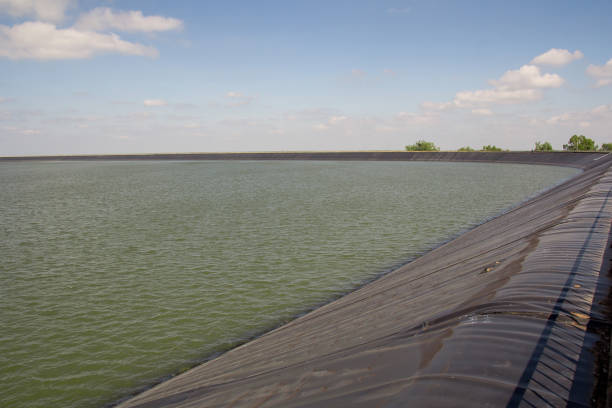
PVC-liner versus HDPE on the same project
HDPE geomembrane dominates large dam and canal fields for chemical resistance and established weld QA at scale. PVC-Liner (PLC) from Petroseal is more flexible, easier to detail in tight corners, and weldable with hot-air or wedge methods on tanks, roofs, and smaller canals where elongation around penetrations matters.
Consultants sometimes specify HDPE for the main basin and PVC for sumps, transitions, or roof boxes—document compatibility at tie-in points.
Thickness and properties
| Thickness | Typical use |
|---|---|
| 1.2 mm | Confined details, minor repairs |
| 1.5 mm | Tanks, canals, roof boxes |
| 2.0 mm | Higher abrasion or puncture exposure |
PVC offers good tear resistance and UV performance when protected or formulated for exposure per grade. Seam testing follows project protocol—air channel or vacuum box on critical tanks.
Roof and tank applications
PLC suits roof waterproofing where sheets can be welded into pans before upturns at parapets. Tank lining demands smooth substrate, rounded corners, and outlet boots welded to the sheet—not stuck-on patches.
Supply from Petroseal
Pair PLC with HDPE geomembrane and geotextile on hybrid civil packages. For farm ponds with uneven settlement, also review our LLDPE geomembrane note. Technical support: 0321 8489737 · petrosealenterprises.com