
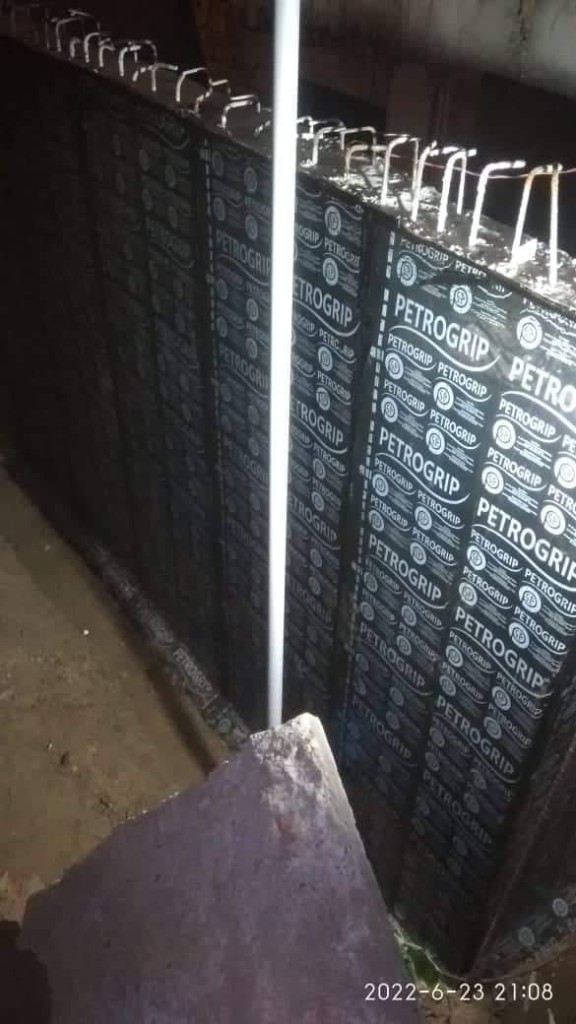
DPC membrane · rising damp · damp proof course · self adhesive DPC · Pakistan
DPC Membrane for Rising Damp Control in Pakistan: PetroGrip Self-Adhesive Rolls
Stop capillary moisture in brick and block walls with PetroGrip self-adhesive DPC rolls—widths 4.5", 9", and 13", 15m length, peel-and-stick installation at plinth level nationwide.
May 2026 · 8 min read
Rising damp and why bitumen DPC still matters
Rising damp is capillary suction of groundwater and soil moisture up masonry walls—visible as tide marks, flaking paint, salt efflorescence, and musty ground-floor rooms. Chemical injections and render systems have their place, but a continuous damp proof course (DPC) at the plinth interrupts the path when installed correctly. PetroGrip DPC bitumen membrane rolls from Petroseal Enterprises are self-adhesive sheets designed for peel-and-stick placement in mortar beds without a propane torch.
Pakistan’s housing stock mixes burnt brick, concrete block, and stone plinths in Lahore, Rawalpindi, Peshawar, Quetta, and village extensions nationwide. In monsoon regions and irrigated farmland edges, soil moisture cycles aggressively. A torn plastic DPC or a missing course at one bay is enough for a decade of damage. Specifying a manufactured bitumen DPC with controlled width and 15m roll length reduces the patchwork failures common with ad hoc site-cut materials.
PetroGrip DPC roll sizes: 4.5", 9", 13", and 15m length
Petroseal manufactures PetroGrip DPC in roll widths aligned to standard wall courses: 4.5 inches, 9 inches, and 13 inches, each in 15m roll length for long, continuous runs along terrace fronts, perimeter walls, and row housing without excessive end joints. Choose width to match one or two block courses so the DPC spans the wall thickness with planned laps at corners and piers.
The 4.5 inch width suits single-leaf or half-brick scenarios and partition damp barriers. The 9 inch width is the workhorse for typical nine-inch cavity and solid walls in urban Lahore and Karachi housing. The 13 inch width covers wider block courses and situations where the DPC must turn up internally or overlap a thicker plinth beam. Fifteen metres of length per roll means fewer end laps on a forty-foot street front—each lap is an inspection point, so fewer laps mean fewer future leak paths.
Installation at plinth and ground-floor level
Install DPC on a level, dry course—usually one or two courses above finished ground or below the first habitable slab, per structural drawing. Remove dust and protruding mortar tails; the self-adhesive compound needs intimate contact with the bedding mortar that will receive the next course. Press the roll continuously; do not bridge voids over honeycombed block. At corners, lap the next strip by at least 100mm and press the overlap with a hand roller.
Where the DPC meets a vertical rising wall membrane or a horizontal podium waterproofing line, show a lap detail in the drawing so the contractor connects systems without a gap at the inside corner. Penetrations for conduits or pipes through the wall should be collared with compatible sealant or a patch of DPC bonded around the sleeve before the next lift of masonry.
Lahore, Karachi, and climate-specific site habits
In Lahore and Punjab, high groundwater tables in new developments on former agricultural land push damp upward within months if the plinth DPC is omitted or punctured by rod ties. Contractors should protect installed DPC from foot traffic and rebar placement before the next course—punctures are invisible once buried. In Karachi, salt and humidity attack finishes above the damp line even when the course is present but discontinuous at party walls.
Mountain cities and northern housing see freeze-thaw at exposed plinths; DPC must sit below the zone of saturated exterior masonry. Petroseal supplies DPC nationwide from Lahore with the same quality checks applied to torch membranes: batch marking, adhesive consistency, and width accuracy. Call 0321 8489737 for quantity take-offs on row housing and commercial plinths.
DPC versus roof membrane: do not confuse the products
DPC rolls are not roof cap sheets. They are thinner, width-optimized barriers for masonry capillary rise, not for permanent ponding water or UV exposure. Using roof membrane scrap as DPC may be too stiff for mortar beds or too narrow for full-width coverage. Conversely, never leave DPC exposed on a terrace expecting roof service life.
For horizontal waterproofing at grade, use PetroGrip torch or self-adhesive roof-grade sheets per the structural waterproofing detail. For vertical rising damp in a party wall, DPC at the appropriate course plus proper external drainage and render breathability completes the strategy. Petroseal’s portfolio lets you source DPC and roof systems from one manufacturer with clear datasheets at petrosealenterprises.com.
Inspection checklist for developers and homeowners
Verify width submittal against block schedule before masonry starts. Photograph continuous runs and corner laps before concealment. Reject courses laid on mud or standing water. Ensure tie holes and chase cuts do not slice the DPC line without a repair patch. On renovations, inject-only marketing promises rarely fix a missing course—opening the plinth and inserting a continuous PetroGrip DPC may be the durable fix.
PetroGrip DPC is Made in Pakistan by Petroseal Enterprises alongside our APP, SBS, and self-adhesive roof membranes. Rising damp is slow, expensive, and visible to every buyer—specify the course once, install it with 4.5", 9", or 13" rolls at 15m length, and close the capillary path before the ground floor is tiled.
Quantity take-off and delivery nationwide
Measure external wall length at DPC level, add lap allowances at corners and piers, and select roll width to minimize longitudinal joints. A forty-foot shop front in Gujranwala or Hyderabad may need two 15m rolls of 9" width with planned overlaps rather than dozens of short offcuts from a roof membrane roll.
Petroseal schedules production in Lahore and ships DPC nationwide with the same batch discipline as torch membrane. Email wall schedules for a bill of materials, or call 0321 8489737 before masonry mobilization so the correct 4.5", 9", or 13" width is on site—not improvised at the last minute from whatever is in the warehouse.
Related products